Thursday, April 2, 2015

The Amazing State of Modern Prosthetics


In honor of the session we had as a class the week of March 23 on Biomedical Engineering, as well as in honor of my own personal major of Biomedical Engineering, I want to use my last long post on this blog to bring attention to my personal favorite topic in the field – prosthetics.  Unlike many who love the topic, I thankfully do not have a personal connection to the subject of prosthesis, but nonetheless it is near and dear to my heart, and some of the ground being broken as we speak is utterly breathtaking.  

Prosthetic limbs have undergone many aesthetic changes throughout history, but until recently the core concept has remained largely unchanged since before the days of pirates, where peg-legs ran amuck on the high seas.  Within the last couple of decades, however, the field has greatly expanded both its knowledge and its flexibility when dealing with practical applications.  The first of this ‘new wave’ of prosthetic limbs came when the real-world forces acting on the body during motion were more thoroughly analyzed and applied to lower limb devices, coming about in the use of advanced springs and padding to simulate the action-reaction motion of force that travels through the legs during activity. The result of this is that the artificial limb pushes back up on the body with a force equivalent to an actual foot and calve, resulting in more fluid and comfortable movement for amputees.  

However, the newest developments taking place in the field though are even more incredible than those prior.  Akin to something strait out of the Star Wars saga, the idea that these limbs can react to natural electrical signals to provide user-created motion is becoming closer and closer to reality.  Two studies out of the Science Translational Medicine are parading a new generation of advanced prostheses that react more naturally to the user’s body thanks to direct-to-bone coupling and two-way implanted electrodes. The study performed in the United States, at Case Western Reserve University in Cleveland, Ohio, used electrodes implanted into prosthetic arms to take in environmental stimuli and transmit the information received up to the nearest natural nerve endings and deposit it.  The results were an ability of the perception of different sensations in different circumstances that lasted for well over a year in the patients acted on.
 
In another part of the country, Dr. Shawn Dirk, alongside colleagues at Sandia National Laboratories, the University of New Mexico and the MD Anderson Cancer Center, has a brilliant concept in the early stages of development.  The hyper-complex nerves that the body houses have been a huge barrier holding reactive prosthetics back, so Dr. Dirk’s proposed solution is to create a synthetic substance that can act as a scaffold for prosthetic limbs and support tissue growth, which would allow for severed nerves to merge with robotic limbs.  One foreseeable application of this technology should the idea work would be to take the next step and implant the electrodes that have been developed in the aforementioned Case Western study in natural positions along the length of the nerves travelling throughout the synthetic limbs.  This would allow for a much greater area of effective data collection as well as sensory output heading the other way from the Central Nervous System.  

The possibilities for this line of approach with prosthesis feels limitless – there are already some incredible ideas being put to the test and some even more incredible results coming out of those tests.  The more the organic structure of the nervous system is understood, and the more the signals involved in it are unlocked and understood, the more prominent the bridge between natural and synthetic will be gapped, right at the source.  

References:

  http://www.medgadget.com/2014/10/breakthrough-prosthetic-arms-with-feeling-of-touch-advanced-integration-video.html

http://www.independent.co.uk/life-style/gadgets-and-tech/news/a-sensational-breakthrough-the-first-bionic-hand-that-can-feel-8498622.html

http://www.wired.com/2012/02/nerve-prosthetics/

Thursday, March 26, 2015

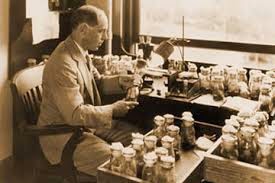
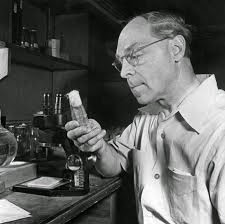
Hermann J. Muller

X-rays are a viable part of medicine today and have been used in clinical medicine and for experimental purposes in physics since their discovery in 1895. The value of X-rays to genetics research only became apparent however when Hermann Muller used radioactivity to produce point mutations in the fruit fly Drosophila. Muller was an American geneticist known for his demonstration that mutations and hereditary changes can be caused by X-rays affecting genes and chromosomes. His work on the mutating abilities of X-rays won him the Nobel Prize for Physiology or Medicine in 1946.


Hermann Joseph Muller was born December 21st, 1890 in New York and died April 5, 1967. He grew up in Manhattan and after graduating high school in 1907 at the age of sixteen, Muller attended Columbia University and was attracted to the emerging field of genetics. He was interested specifically in the physical and chemical nature and operations of genes. Muller also continued his graduate education at Columbia and spent time in T.H. Morgan’s infamous Drosophila lab. Muller along with other students in the lab, took part in stealing milk bottles from apartment steps in order to house the fruit flies.

During his time in the Fly Lab, Muller published a paper demonstrating the effects of mutations in one gene on the expression of other genes, implying that many fly characteristics depended on the interaction of several genes. However, Muller clashed with Morgan and his other students, particularly Alfred Sturtevant, feeling that he was not fully acknowledged and that his ideas weren’t fully represented in the papers.  Due to his quarrels with members of the lab, Muller left in 1915 after obtaining his degree. 

Muller continued his studies involving the molecular, physical, and chemical natures and operations of genes and their resulting effects on gene expression to demonstrate during the 1920s that X-rays could induce mutations. This discovery won him fame and then later contributed to his winning of the Nobel Prize.

In 1926 at the University of Texas, Muller exposed male fruit flies to high doses of radiation to then let them mate with virgin female fruit flies. Muller was able to artificially induce more than 100 mutations in the offspring. Some of the mutations were deadly others were not lethal but visible in the offspring. Muller concluded that radioactivity had the ability to reach chromosomes to affect the molecular structure of individual genes leaving them either inoperative or altering their chemical functions.

Muller’s paper “Artificial Transmutation of the Gene” published in 1927 provided only an outline of the data but he presented at the International Congress of Plant Sciences to create a media sensation. He used his fame from his discovery to caution against the indiscriminate use of X-rays in medicine. Despite his adamant warnings, some physicians continued using high amounts of X-rays and some even continued to prescribe X-rays to stimulate ovulation in sterile women.

Muller also was known for his strong and often outspoken views on socialism, which got him in trouble with the administration while working at the University of Texas. He collaborated on a Communist newspaper at the University resulting in the FBI tracking his activities. Muller decided to leave for Europe in 1932 during the Depression and moved to the Soviet Union in 1934.  

Initially Muller was happy with the progressive Communist society in the Soviet Union, however he quickly grew unhappy as Stalin’s police state attacked genetics by pushing the Lamarckian ideas of evolution. The state dictated who could work in his lab and interrogated him for referring to the work of Germans or Russian emigres. Muller eventually left the Soviet Union in 1937 and spent eight weeks in Spain helping the International Brigade develop a method of obtaining blood from recently killed soldiers to use for transfusions. He then moved again, this time to Scotland and worked at the University of Edinburgh continuing with X-rays and other mutagens like UV and mustard gas.

In 1940, Muller fled Scotland due World War II to find a permanent position at Indiana University in 1945. A year later in 1946, Muller was awarded the Nobel Prize for his work on mutation-inducing X-rays. He seized this opportunity to continue pressing for more public knowledge about the hazards of X-ray radiation. Hermann Muller increased his stature to speak out after the dropping of atomic bombs on Nagasaki and Hiroshima in 1945.

Throughout his career, Muller advocated for the education of the public by scientists. He felt that it was the responsibility of scientists to educate the public on their research or on pertinent topics. Muller fought against the Texas school board’s attack on evolution. Hermann Muller often was faced with strict criticism for beliefs, yet he advocated for scientists to speak out on topics and to not be afraid to use their voices.

 He did promote the view of eugenics, but he criticized the American eugenics movement for its racism and classism. He recommended voluntary reproduction through artificial insemination for families with genetic disorders. He supported “positive” eugenics such as the use of reproductive technologies such as sperm banks and artificial insemination but wrote that “ Any attempt to accomplish genetic improvement through dictation must be debasing and self-defeating”.

Hermann J. Muller died on April 5, 1967 due to congestive heart failure.

I find Muller’s call for scientists to educate others on their findings to be valuable and vital for the discoveries of scientists to fully reach their significance and potential. It isn’t until the knowledge is understood by others, especially the general public, that we can say that the finding has reached its true value. It allows people to act on the knowledge for positive change. This can be carried beyond merely informing the public to involving them as seen in the ideas of Citizen Science that were discussed a few weeks ago by Dr. Haynes. Involving those influenced by the issues provides a more direct source to the problems, resulting in ideas and opinions for solutions from those actually experiencing the problem.


 Muller additionally told his students to bear witness to and to speak out against the abuses of science in their generation. He argued that genetics was the most subversive science due its basis being fundamental to human nature and for that we must take the most ethical and respectful approach. Muller’s continual and adamant advocacy against the dangerous effects of X-rays is admirable and crucial to our current precautions surroundings use of radiation. Muller’s insight into genes as individual molecular units was influential and spurred the development of molecular biology and for that, his legacy continues today.


Works Cited
Carlson, Elof. "Hermann Joseph Muller." Hermann Joseph Muller 1890—1967 (2009): n. pag. National Academy of Science Online. National Acadmey of Science, 2009. Web. 26 Mar. 2015.
"Hermann J Muller." GNN - Genetics and Genomics Timeline. Genetics News Network, n.d. Web. 26 Mar. 2015.
"Hermann Joseph Muller". Encyclopædia Britannica. Encyclopædia Britannica Online.
Encyclopædia Britannica Inc., 2015. Web. 26 Mar. 2015
"Hermann Muller." Hermann Muller. Cold Springs Harbor Laboratory, n.d. Web. 26 Mar. 2015.
"Hermann Muller." Hermann Muller. Cold Springs Harbor Laboratory, n.d. Web. 26 Mar. 2
"Hermann J. Muller - Biographical". Nobelprize.org. Nobel Media AB 2014. Web. 26 Mar 2015.

Wednesday, February 4, 2015

Precision Medicine: A Targeted Approach to Treatment

“I want the country that eliminated polio and mapped the human genome to lead a new era of medicine – one that delivers the right treatment at the right time. In some patients with cystic fibrosis, this approach has reversed a disease once thought unstoppable. Tonight, I'm launching a new Precision Medicine Initiative to bring us closer to curing diseases like cancer and diabetes – and to give all of us access to the personalized information we need to keep ourselves and our families healthier.”

            This quote, from President Barack Obama’s State of the Union address on January 28th 2014, marked the start of a federal effort to shift the way in which diseases are treated. President Obama coined the program the “Precision Medicine Initiative”, and its goal is to shift the paradigm of disease treatment from a “one-fits all” model to a more personalized approach. To support this effort, $215 million has been budgeted for investment in organizations such as the National Institutes of Health (NIH), the FDA, and the Office of the National Coordinator for Health Information Technology.


            With this funding, these organizations have set goals of enrolling millions of individuals in research programs to track and house a multitude of factors that contribute to the individuals’ well being. With this information, a database is to be set up to house all of the data that is collected through the research. The database will contain a multitude of information such as medical records, gene profiles, lifestyle activities and more. From this, the government hopes to generate new advancements in biomedicine that will allow physicians to tailor treatment options to the individual, so that diseases can be diagnosed and treated on an individual and more personal basis. The research will focus on establishing patterns among individuals, and scientists will analyze how individuals are similar in terms of their genetic makeup, lifestyle choices, environmental exposures, and many other factors. Using this information, patients can be classified into subpopulations for which a specific treatment can be developed to be better combat disease.

            The benefits of this approach are plentiful. The most obvious of these is that physicians will be able to fine-tune treatments for individuals so that diseases can be diagnosed and treated in a targeted manner. It will also allow individuals access to their own health profile, giving them a sense of empowerment and control over their health. In turn this could empower individuals and families to take action against destructive lifestyle choices that may be affecting their health. Having this knowledge at one’s own fingertips in this easy of a manner could kick start a desire to change unhealthy habits.


            More importantly in my mind, this program encourages private and public programs to work together. Reading “The Genome War” opened my eyes as to the pride that researchers feel towards their work, as well as the disdain that is held when that work is purely sought after to put money in the pockets of corporations. This program offers incentive for both sides, both academia and the private sector. Research institutions such as NIH will be receiving funding to carry out the research and organization behind the database. What this research uncovers will then pave the way for better treatments and drugs to combat specific forms or types of diseases that are seen in individuals with patterns of genetic and lifestyle characteristics. I view this relationship as a very important and necessary one. Too often is research halted or completely abandoned due to a lack of funding. The private sector has the money to fund such research, but there is no motive from a business standpoint to invest in “basic research” that may not turn up anything of value. This Precision Medicine Initiative is giving researchers the initial funding they need to prove that personalized medicine is the future, and I believe that once the ball gets rolling the private sector will realize the value in the approach. Hopefully this will motivate the private sector to invest in this research without losing sight of the goal: to improve the lives of those living with the diseases that give their products purpose.

Tuesday, February 3, 2015

When Does Life Begin: The Ethical Dilemma Behind Embryonic Stem Cell Research

At what point is something considered human?  Is the potential of life more important than saving a life?  What level of protection and respect is required for what stages of embryonic development?  These are some of the questions the National Bioethics Advisory Commission had to ask in order to determine whether or not embryonic stem cell research is moral or ethical.

Areas where adult stem cells
can be found
Stem cells can be found in many places in the body and can be used to study diseases, test new drugs, identify how undifferentiated cells become differentiated, and generate cells and tissues that could be used for cell-based therapies.  There are three types of stem cells that scientists understand.  Adult stem cells are differentiated cells that can be found in the brain, heart, and bone marrow.  They can renew themselves and yield some or all of the major specialized cell types of tissue or organ in the human body.  Their primary role is to maintain and repair the tissues in which they are found.  This means that stem cells found in the heart are differentiated to repair heart muscle cells whereas stem cells found in the leg are differentiated to repair leg muscle cells.  The second type of stem cell is induced pluripotent stem cells.  These stem cells are adult cells that have been genetically reprogrammed to an embryonic stem cell-like state through the forced expression of genes and other factors important for embryonic stem cells.  The last type of stem cell is embryonic stem cells.  Embryonic stem cells have the capacity to become any cell in the human body.  They are entirely undifferentiated (pluripotent).  They are easier to grow in a culture than adult stem cells and offer opportunities to learn about the differentiation of cells and the growth of human embryos.  This could pave the road for research in genetic diseases and birth defects.  Embryonic stem cells are derived from embryos.  Most are derived from fertilized eggs (in vitro) that were donated for research purposes.  They are NOT derived from fertilized eggs in a woman's body.  Once the eggs are obtained, they must be grown until about five days after fertilization when the blastocyst has formed and is filled with inner cell mass (embryoblast), the cells that are then used in embryonic stem cell research.  In order to obtain these cells, the blastocyst must be broken and the ethical dilemma arises.
Blastocyst with inner cell mass
in upper right.

Despite the scientific advances embryonic stem cell research could have, the ethical dilemma forces us to choose between two moral principles:
  1. The duty to prevent or alleviate suffering
  2. The duty to respect the value of human life
This is because in order to obtain the cells, the embryo has to be destroyed, thus destroying a possible human life, despite its potential to alleviate the suffering of thousands of people.  Therefore, the moral question behind embryonic stem cell research is at what point does a human embryo count as a human life and what degree of respect and protection is required at different stages of development?  Some examples of the arguments include the moral status from fertilization onwards and whether or not the embryo has increasing status as it develops.

Arguments against Embryonic Stem Cell Research:
Arguments for embryonic stem cell research:
“Development from a fertilized egg into a baby is a continuous process and any attempt to pinpoint when person-hood begins is arbitrary.”
·         It has not yet been implanted into the uterus
·         Does not have the psychological, physical, or emotional properties associated with being human
·         The embryo does not have the opportunity to become a child without being implanted into a woman’s uterus.  Something with such a low probability of becoming a person should not be treated as if it already were
·         If we judge the moral status of the embryo in order to determine it human-hood, we make an arbitrary decision about who is human.  If human-hood was defined as the formation of the nervous system, we still would not believe that someone who had lost nerve to be any less human.
·         If we cannot determine whether or not an embryo is human than we should not destroy it.  “A hunter does not shoot if he is not sure whether his target is a deer or a man.”
·         Tons of fertilized eggs are lost because of natural causes so what does it matter if we use some for research?

                After much deliberation of the National Bioethics Advisory Commission, it was decided that while the research was ethical, restrictions needed to be set in place in order to provide the public with the assurance that the research would be conducted within an accountable and rigorous system of oversight and review.  The restrictions that were recommended were that first, the research should be limited to using only “cadaveric fetal material” and embryos remaining after infertility treatments.  Second, sponsorship should only occur on an appropriate system of national oversight. 
                In conclusion, while the board was unable to determine when human life truly began or what stages of development require what levels of protection and respect, it was decided that embryonic stem cell research was, in fact, moral as long as it followed the guidelines they set.